
The Ulu Masen Ecosystem spans 9,500 km² of tropical rainforest in Aceh province. Located about 4 degrees north of the equator, the region is connected to the Leuser Ecosystem and forms part of the immense Sundaland Biodiversity Hotspot. Ulu Masen’s diverse assortment of habitats – montane forest, lowland rainforest, and tropical pine forest – still provide refuge for several dozen tigers. In the Ulu Masen Ecosystem of Aceh, Hutan Harimau will focus its conservation efforts in Mane Subdistrict, an important forest landscape for Sumatran tigers and other wildlife.
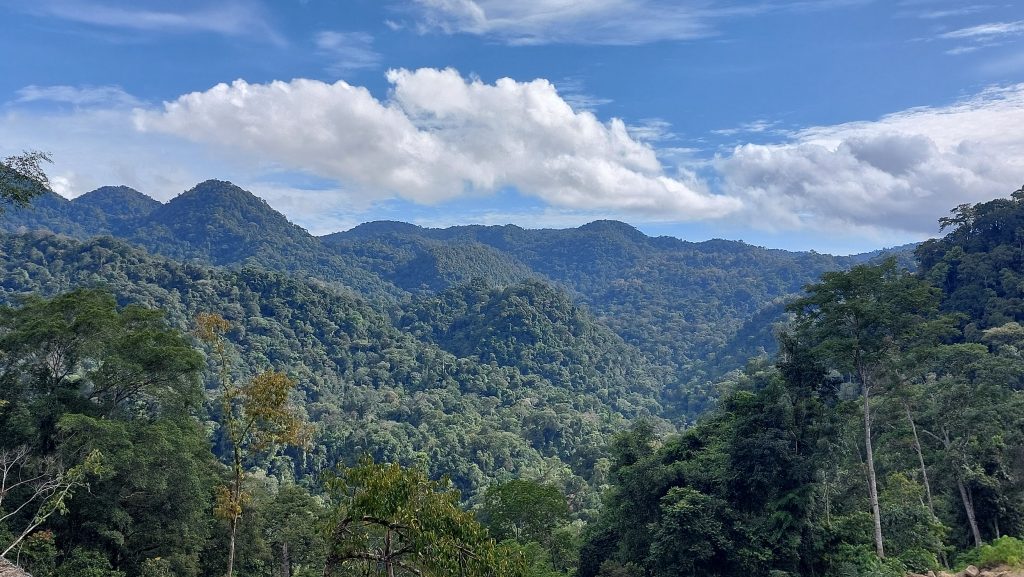
Deep in the highlands of Pidie, Aceh, lies Mane—a village embraced by the forests of the Ulu Masen landscape, one of Sumatra’s most extraordinary strongholds of biodiversity. Here, the forest is more than a landscape. It is part of everyday life. Dense green canopies stretch across the mountains. Clear rivers rush through the valleys, carrying water from the forest to the communities below. Cool mountain air fills the villages, while somewhere beyond the trails and beneath the trees, one of Sumatra’s most iconic species still roams—the Sumatran tiger.
For generations, people in Mane have lived alongside the forest and its wildlife. Their knowledge of the land, passed from one generation to the next, holds stories, observations, and wisdom that cannot always be found in books or scientific journals. This is what makes Mane special. It is a place where Indigenous Science and modern science can meet—where the knowledge of people who have lived with the forest can come together with research, technology, and new ideas to better understand and protect the Sumatran tiger.
But conservation here is not simply about protecting a species. It is about protecting the relationship between people and the forest. It is about creating opportunities for communities to become stronger stewards of the land they call home. It is about environmental education that inspires children to see the forest not as something distant, but as part of their future. It is about supporting nature-based livelihoods that allow families to prosper without sacrificing the forests that sustain them. And it is about giving young people the knowledge, confidence, and opportunity to become the next generation of forest guardians.
The future of the Sumatran tiger will not be decided only inside protected areas. It will also be shaped in villages like Mane, where people and wildlife continue to share the same landscape.When communities are empowered, when local knowledge is valued, when young people become connected to nature, and when forests remain standing, conservation becomes more than protection—it becomes a shared vision for the future.
Mane is a place where that vision can grow. A place where people learn from the forest, science learns from communities, and conservation becomes a journey we take together. Because protecting the Sumatran tiger means protecting more than a species. It means protecting the forest, the people, and the future they share.